Young Arthritic Knee: Advancing Knee Care Through Innovation and Collaboration
Knee arthritis has long been considered a disease primarily affecting elderly individuals. However, in recent years orthopaedic specialists around the world have observed a rising number of young patients suffering from knee arthritis, a condition often referred to as Young Arthritic Knee (YAK). This condition presents unique clinical challenges because it affects individuals who are still active, professionally engaged, and physically demanding in their daily lives. Managing arthritis in younger patients requires advanced surgical techniques, careful planning, and a focus on preserving joint function for many years.
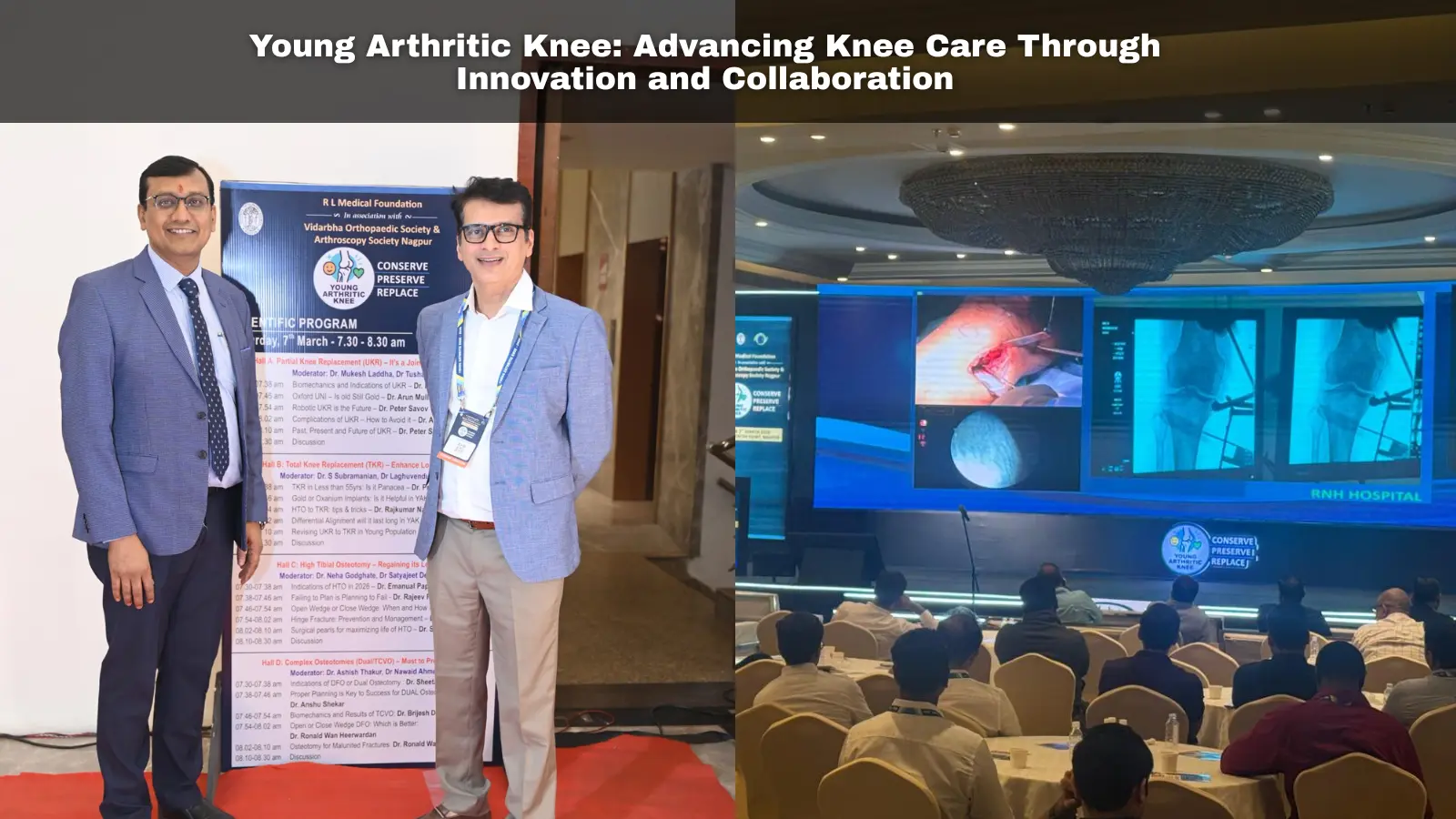
To address these challenges and promote knowledge sharing among orthopaedic specialists, an important medical event titled Young Arthritic Knee (YAK) was organized in Nagpur by the Rathi and Laddha Foundation (RL Foundation). The event brought together renowned orthopaedic surgeons and experts from across India and around the world to discuss modern treatment approaches, demonstrate advanced surgical techniques, and improve patient outcomes for young individuals suffering from knee arthritis. The program also included live surgical demonstrations performed at RNH Hospital, providing a valuable learning opportunity for surgeons and medical professionals attending the event.
Understanding Young Arthritic Knee
Arthritis refers to inflammation and degeneration of joints, commonly leading to pain, stiffness, swelling, and reduced mobility. The knee joint, being one of the most heavily used joints in the body, is particularly vulnerable to arthritis. Traditionally, osteoarthritis of the knee has been associated with aging. However, several factors are now contributing to arthritis appearing at a much younger age.
Young arthritic knee is a condition in which patients typically below the age of 50 develop significant damage to the knee joint. This may occur due to previous injuries, ligament tears, cartilage damage, obesity, genetic factors, inflammatory diseases, or excessive physical stress on the joint. Athletes, individuals with a history of knee trauma, and people with metabolic or inflammatory conditions are particularly at risk.
Unlike elderly patients, younger individuals with knee arthritis have higher functional expectations. They want to remain active, participate in sports, and maintain demanding lifestyles. Therefore, treatment strategies must focus not only on pain relief but also on joint preservation, mobility, and long-term durability of treatment.
Challenges in Treating Young Arthritic Patients
Treating young patients with knee arthritis presents unique challenges for orthopaedic surgeons. In elderly patients, total knee replacement surgery is often the definitive solution because the artificial joint can last for many years within the expected lifespan of the patient. However, in younger patients, surgeons must carefully evaluate treatment options because these patients may require their knee joints to function for several decades.
As a result, surgeons often attempt joint preservation techniques before considering complete knee replacement. These techniques include cartilage repair procedures, osteotomy surgeries, ligament reconstruction, and partial knee replacement procedures. Modern advancements in orthopaedic technology, including robotic-assisted surgery and minimally invasive techniques, have significantly improved the success rate of such treatments.
Because of these complexities, there is a growing need for continuous training and collaboration among orthopaedic surgeons worldwide. Conferences and academic events focused on the young arthritic knee play a crucial role in improving treatment standards and patient outcomes.
The Young Arthritic Knee (YAK) Event in Nagpur
Recognizing the importance of addressing this emerging orthopaedic challenge, the Rathi and Laddha Foundation (RL Foundation) organized the Young Arthritic Knee (YAK) event in Nagpur. The conference aimed to create a platform for orthopaedic surgeons to discuss innovative treatment strategies, share clinical experiences, and demonstrate advanced surgical techniques for managing knee arthritis in younger patients.
The event attracted distinguished faculty members and orthopaedic experts from across India and around the globe. These specialists came together to exchange ideas, present research findings, and discuss the latest developments in knee preservation and replacement surgeries. Such scientific gatherings are essential for advancing medical knowledge and ensuring that patients receive the most effective treatments available.
One of the major highlights of the event was the live surgical demonstrations conducted at RNH Hospital, which allowed participants to observe advanced surgical procedures in real time. Live surgery sessions are considered highly valuable educational experiences because they provide direct insights into surgical decision-making, techniques, and patient management.
Live Surgeries at RNH Hospital
A key feature of the Young Arthritic Knee conference was the series of live surgeries performed by internationally renowned orthopaedic surgeons at RNH Hospital in Nagpur. These procedures demonstrated the latest modalities in treating young arthritic patients and highlighted the advancements in modern orthopaedic surgery.
The live surgery sessions allowed attending surgeons and delegates to observe complex knee procedures step by step. Experts explained surgical techniques, discussed case selection, and shared insights into patient recovery and rehabilitation. Such live demonstrations provide invaluable opportunities for learning because they showcase real clinical scenarios rather than theoretical discussions.
The surgeries included advanced procedures focused on joint preservation, minimally invasive interventions, and modern knee replacement techniques. By witnessing these procedures live, participants were able to understand the precision and planning required in managing young arthritic knees.
These demonstrations emphasized the importance of combining surgical expertise, advanced technology, and patient-centered care to achieve successful outcomes.
Recognition of RNH Hospital’s World-Class Infrastructure
During the conference, visiting surgeons and faculty members expressed their appreciation for the world-class infrastructure and medical facilities available at RNH Hospital. The hospital’s advanced operating theatres, modern surgical equipment, and well-organized clinical setup played a crucial role in successfully conducting the live surgeries and academic sessions.
Medical experts highlighted that having such high-quality infrastructure is essential for performing complex orthopaedic procedures and ensuring patient safety. The availability of advanced imaging systems, specialized surgical instruments, and well-trained medical teams allows surgeons to deliver the highest standard of care.
The visiting faculty also acknowledged the efforts made by the hospital in promoting medical education and providing a platform for international collaboration. By hosting live surgical events and academic conferences, the institution contributes significantly to the advancement of orthopaedic practice in India.
Importance of Academic Conferences in Orthopaedics
Medical science is constantly evolving, and orthopaedics is no exception. New surgical techniques, implant designs, and treatment protocols continue to emerge, making it essential for surgeons to stay updated with the latest developments.
Academic events such as the Young Arthritic Knee conference serve as important platforms where doctors can exchange knowledge, learn from global experts, and discuss complex clinical cases. Conferences often include lectures, panel discussions, case presentations, and live demonstrations that help surgeons improve their skills and adopt modern treatment methods.
Such events also encourage collaboration among medical professionals from different parts of the world. This exchange of ideas leads to innovations in treatment strategies and helps improve patient care standards globally.
The Future of Young Arthritic Knee Treatment
The management of young arthritic knee continues to evolve as new technologies and surgical techniques are introduced. Robotic-assisted surgeries, advanced implants, regenerative medicine, and biologic treatments are opening new possibilities for joint preservation and improved outcomes.
In the future, treatment approaches will increasingly focus on personalized medicine, where therapies are tailored according to the patient’s age, activity level, and specific joint condition. Research in cartilage regeneration and tissue engineering may also provide revolutionary solutions for repairing damaged joints without the need for complete replacement.
Events like the Young Arthritic Knee conference play a vital role in accelerating these advancements by bringing together experts who are dedicated to improving patient outcomes and pushing the boundaries of orthopaedic innovation.