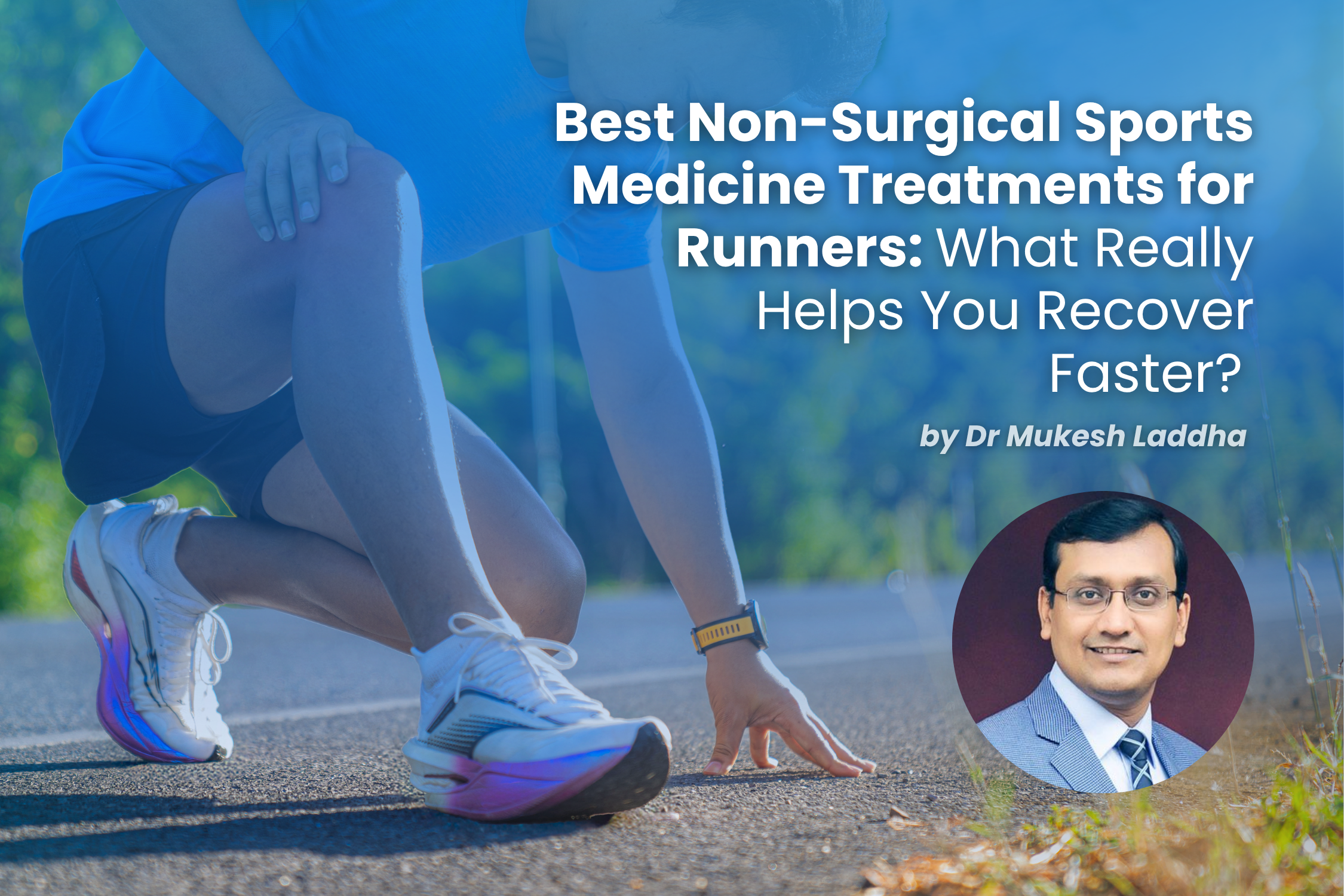
Best Non-Surgical Sports Medicine Treatments for Runners: What Really Helps You Recover Faster? by Dr Mukesh Laddha, RNH Hospital
Running is one of the most effective ways to stay fit, improve cardiovascular health, and maintain mental well-being. However, repetitive stress on the knees, ankles, hips, feet, and lower back can lead to sports injuries that affect both professional athletes and recreational runners. Many runners worry that pain automatically means surgery, but in reality, most running-related injuries can be treated successfully without surgical intervention.
Modern sports medicine focuses heavily on non-surgical treatment options that reduce pain, improve mobility, accelerate healing, and help runners safely return to activity. With advances in physiotherapy, regenerative medicine, rehabilitation science, and biomechanical assessment, runners today have access to highly effective conservative treatments.
In this article, we explore the best non-surgical sports medicine treatments for runners and how they help prevent long-term complications. To know more about RNH Hospital, visit – https://rnhhospital.com/
Why Do Runners Commonly Develop Sports Injuries?
Running places repeated mechanical stress on muscles, tendons, joints, and ligaments. Over time, improper training techniques, poor footwear, weak muscles, or inadequate recovery may lead to overuse injuries.
Common running injuries include:
- Runner’s knee (Patellofemoral Pain Syndrome)
- IT band syndrome
- Achilles tendinitis
- Shin splints
- Plantar fasciitis
- Stress injuries
- Hamstring strains
- Hip pain
- Ankle instability
Many of these conditions respond extremely well to early sports medicine intervention without surgery.
What Are the Best Non-Surgical Sports Medicine Treatments for Runners?
Several advanced non-operative treatments are now available for runners. The best treatment depends on the severity of the injury, duration of symptoms, biomechanics, and overall fitness level.
The most effective non-surgical treatments include:
- Physiotherapy and rehabilitation
- Sports injury rehabilitation programs
- Strength and conditioning therapy
- Gait and biomechanical analysis
- Manual therapy
- Dry needling
- Taping and bracing
- Shockwave therapy
- Platelet-Rich Plasma (PRP) therapy
- Pain management and anti-inflammatory care
- Activity modification and return-to-run protocols
A personalized treatment approach usually provides the best outcome.
How Does Physiotherapy Help Runners Recover Naturally?
Physiotherapy is considered one of the most important non-surgical sports medicine treatments for runners. It addresses the root cause of pain instead of simply masking symptoms.
Sports physiotherapists evaluate:
- Muscle weakness
- Joint stiffness
- Running posture
- Flexibility deficits
- Balance and stability
- Muscle imbalances
- Core strength
A structured rehabilitation plan may include:
- Stretching exercises
- Strength training
- Mobility drills
- Balance exercises
- Neuromuscular retraining
- Running-specific rehabilitation
For example, runners with knee pain often have weak hip stabilizers and glute muscles. Correcting these weaknesses reduces pressure on the knee joint and prevents recurrence.
Physiotherapy also helps runners safely return to training without increasing injury risk.
Can Gait Analysis Improve Running Injuries?
Yes, gait analysis is one of the most valuable tools in sports medicine for runners.
Gait analysis studies how a runner moves while walking or running. Specialists examine:
- Foot strike pattern
- Knee alignment
- Hip movement
- Running cadence
- Stride length
- Body posture
Even minor biomechanical abnormalities can create excessive stress on joints and tendons over time.
For example:
- Overpronation may contribute to plantar fasciitis
- Poor hip control may worsen runner’s knee
- Incorrect stride mechanics may increase shin splints
After identifying movement abnormalities, sports medicine specialists design corrective exercise programs and footwear recommendations to improve running efficiency and reduce injury recurrence.
What Is Shockwave Therapy for Running Injuries?
Shockwave therapy is a modern non-invasive treatment used for chronic tendon and soft tissue injuries.
This treatment uses acoustic waves to stimulate healing in damaged tissues. It is commonly used for:
- Plantar fasciitis
- Achilles tendinitis
- Tennis elbow
- Chronic hamstring tendinopathy
- Patellar tendinitis
Shockwave therapy helps by:
- Improving blood circulation
- Stimulating tissue repair
- Reducing chronic inflammation
- Accelerating healing response
- Decreasing pain sensitivity
Many runners experience improvement after a few sessions, especially when combined with rehabilitation exercises.
One major advantage is that shockwave therapy requires no surgery, hospitalization, or prolonged downtime.
Is PRP Therapy Effective for Runners?
Platelet-Rich Plasma (PRP) therapy has become increasingly popular in sports medicine.
In PRP treatment, a small amount of the patient’s blood is processed to concentrate platelets and growth factors. The concentrated plasma is then injected into the injured area to support healing.
PRP therapy may help runners suffering from:
- Chronic tendon injuries
- Ligament sprains
- Muscle injuries
- Mild cartilage damage
- Persistent plantar fasciitis
The growth factors released by platelets may accelerate tissue repair and reduce recovery time.
PRP is especially useful when conventional therapies fail to provide adequate relief.
However, proper patient selection is important, and outcomes vary depending on the severity of injury and rehabilitation compliance.
How Important Is Strength Training for Injury Prevention?
Strength training is essential for runners, yet many runners ignore it.
Weak muscles force joints and tendons to absorb excessive impact during running. Sports medicine specialists now consider strength training a critical part of both treatment and prevention.
Key muscle groups targeted include:
- Glutes
- Quadriceps
- Hamstrings
- Core muscles
- Calves
- Hip stabilizers
Benefits of strength training include:
- Improved running efficiency
- Better shock absorption
- Reduced injury risk
- Improved posture
- Enhanced endurance
- Faster recovery
Research consistently shows that runners who follow structured strength programs experience fewer overuse injuries.
Can Manual Therapy Reduce Running Pain?
Manual therapy is commonly used by sports physiotherapists to improve mobility and decrease pain.
It may include:
- Soft tissue release
- Joint mobilization
- Myofascial release
- Trigger point therapy
- Muscle stretching techniques
Manual therapy helps improve:
- Muscle flexibility
- Joint movement
- Blood circulation
- Pain reduction
- Recovery speed
For runners with tight calf muscles, hip stiffness, or IT band tightness, manual therapy can significantly improve comfort and movement quality.
It is usually combined with active rehabilitation exercises for long-term improvement.
What Role Does Dry Needling Play in Sports Medicine?
Dry needling is another increasingly popular treatment for runners with muscle tightness and trigger points.
Thin needles are inserted into tight muscle bands to:
- Release muscle tension
- Improve blood flow
- Reduce pain
- Improve mobility
Dry needling is commonly used for:
- Calf tightness
- Hamstring pain
- IT band-related discomfort
- Glute muscle trigger points
- Lower back muscle spasm
Many runners notice immediate relief in muscle tightness after treatment.
However, dry needling works best when combined with strengthening and corrective exercises.
How Do Sports Medicine Specialists Create Return-to-Run Programs?
One of the biggest mistakes runners make is returning to training too quickly after injury.
Sports medicine specialists design gradual return-to-run programs that allow tissues to heal safely while maintaining fitness.
These programs are based on:
- Pain levels
- Functional assessment
- Strength testing
- Running tolerance
- Recovery response
A structured progression may include:
- Walking
- Walk-jog intervals
- Short-distance running
- Controlled speed work
- Gradual mileage increase
This approach reduces reinjury risk and helps runners regain confidence.
Can Proper Footwear Help Prevent Running Injuries?
Yes, running shoes play a major role in injury prevention.
Different runners require different footwear based on:
- Foot arch type
- Running surface
- Biomechanics
- Injury history
- Training intensity
Sports medicine experts often recommend footwear assessment as part of injury management.
Worn-out or inappropriate shoes may contribute to:
- Knee pain
- Shin splints
- Plantar fasciitis
- Achilles problems
Proper footwear improves shock absorption, stability, and running efficiency.
When Should Runners Seek Sports Medicine Treatment?
Runners should not ignore persistent pain.
Early evaluation is important if symptoms include:
- Pain lasting more than a few days
- Swelling
- Difficulty running
- Recurrent injuries
- Pain during daily activities
- Reduced performance
- Joint instability
Early treatment often prevents minor problems from becoming chronic injuries.
Ignoring symptoms may lead to prolonged recovery and time away from running.
Why Is Early Non-Surgical Treatment Better Than Delayed Care?
Many running injuries worsen gradually over time. Early sports medicine intervention helps:
- Reduce inflammation
- Correct movement problems
- Prevent compensatory injuries
- Improve healing speed
- Avoid surgery
- Maintain athletic performance
Non-surgical treatment is usually safer, less expensive, and associated with faster recovery compared to surgical procedures.
Most importantly, it allows runners to return to activity while preserving long-term joint and muscle health.
What Is the Future of Non-Surgical Sports Medicine for Runners?
Sports medicine continues to evolve rapidly.
Emerging technologies now include:
- Advanced biomechanical analysis
- AI-assisted movement assessment
- Regenerative therapies
- Personalized rehabilitation plans
- Wearable running sensors
- Recovery monitoring systems
The future focus is shifting toward prevention, performance optimization, and early intervention rather than simply treating injuries after they occur.
For runners, this means better recovery outcomes, fewer surgeries, and longer athletic careers.
Final Thoughts: Which Non-Surgical Treatment Is Best for Runners?
There is no single “best” treatment for every runner. The most effective approach usually combines multiple therapies tailored to the individual injury and running style.
In most cases, a combination of:
- Physiotherapy
- Strength training
- Biomechanical correction
- Sports rehabilitation
- Recovery management
provides excellent results without surgery.
The key is early diagnosis, proper rehabilitation, and gradual return to activity.
With the right sports medicine care, most runners can recover successfully, improve performance, and continue running safely for years to come.