What Is Cataract? Types, Causes, Symptoms & Cataract Surgery Explained by Dr Nita Rathi
Cataracts are one of the most common eye conditions, particularly as people get older. They develop when the normally clear lens inside the eye becomes cloudy or opaque, gradually affecting the way light reaches the retina. This can result in blurred vision, glare, difficulty seeing at night and faded colours.
But what is cataract, exactly? What causes it, what are the different types, and when might cataract surgery be needed? Understanding these questions can help you recognise the early signs and seek an eye examination at the right time.
What Is Eye Cataract?
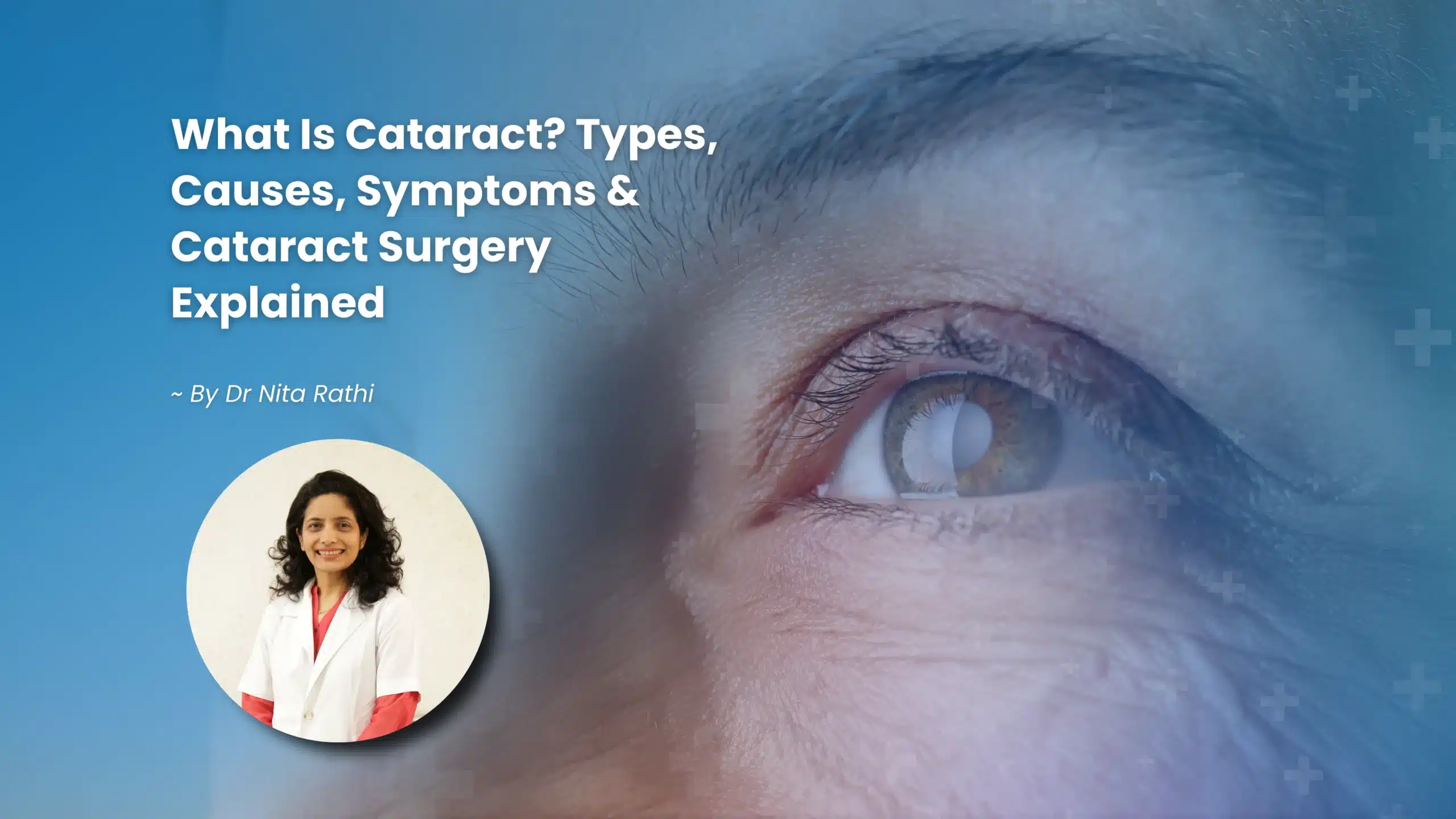
A cataract is a clouding of the natural lens of the eye. The lens sits behind the iris and pupil and normally helps focus light onto the retina. When proteins and structural components within the lens change over time, areas of cloudiness can develop.
In simple terms, what is eye cataract? It is a condition in which the eye’s natural lens gradually loses its transparency, making vision less clear.
Cataracts usually develop gradually rather than suddenly. In the early stages, a person may not notice significant changes. As the cataract progresses, however, vision may become increasingly blurred or hazy.
What Are the Symptoms of Cataract?
Cataract symptoms can vary depending on the type and location of the clouding. Common symptoms include:
- Blurred or cloudy vision
- Difficulty seeing clearly at night
- Increased sensitivity to bright light
- Glare or halos around lights
- Colours appearing faded or less vibrant
- Difficulty reading or performing detailed tasks
- Frequent changes in glasses prescription
- Reduced contrast or clarity
Some people may initially manage their symptoms by changing their glasses prescription or improving lighting. However, glasses cannot remove the cataract itself.
What Are the 3 Types of Cataracts?
If you are searching what are the 3 types of cataracts, the three most common types of age-related cataracts are nuclear, cortical and posterior subcapsular cataracts. They are classified according to the part of the lens where the clouding develops.
1. Nuclear Cataract
A nuclear cataract develops in the central part, or nucleus, of the eye’s natural lens. It generally progresses slowly and can cause the lens to become yellow or brown over time.
Nuclear cataracts can particularly affect distance vision. Some people may also experience changes in their glasses prescription as the cataract develops.
2. Cortical Cataract
A cortical cataract affects the outer portion of the lens, known as the cortex. It can produce spoke-like or wedge-shaped cloudy areas that extend toward the centre of the lens.
Glare is a common complaint, particularly when looking at bright lights or headlights at night. The effect on vision depends on how close the clouding gets to the central visual axis.
3. Posterior Subcapsular Cataract
A posterior subcapsular cataract develops toward the back of the lens, just beneath the lens capsule. Because it can affect the central visual area, it may cause noticeable visual problems even when the cataract is relatively small.
People with this type may experience glare, difficulty seeing in bright conditions and problems with near vision. Posterior subcapsular cataracts can sometimes progress more quickly than nuclear cataracts.
It is also possible for a person to have more than one type of cataract at the same time.
What Causes Eye Cataracts?
So, what causes eye cataracts? Ageing is one of the most important risk factors, but cataracts are not caused by ageing alone.
The natural lens undergoes structural and chemical changes over time, which can gradually reduce its transparency. Other factors can also increase the risk of developing cataracts.
Important risk factors include:
- Increasing age
- Diabetes and prolonged high blood sugar
- Long-term use of steroid medicines
- Smoking
- Previous eye injury
- Previous eye surgery
- Excessive exposure to ultraviolet sunlight
- Certain eye diseases
- Family history of cataracts
- Certain metabolic or genetic conditions
- Radiation exposure
Therefore, cataracts can sometimes develop earlier than expected, especially when multiple risk factors are present.
What Is the Reason for Cataract?
People often ask, what is the reason for cataract when they notice their vision becoming cloudy or blurry.
The most common reason is the natural ageing process of the eye’s lens. As the lens ages, changes in its proteins and structure can make it less transparent. Over time, these changes can become significant enough to interfere with vision.
However, cataracts can also occur because of diabetes, eye trauma, prolonged steroid use, previous eye surgery, excessive ultraviolet exposure and certain medical or genetic conditions.
This is why cataracts are not exclusively an age-related problem. A younger person with certain risk factors can also develop cataracts.
How Is Cataract Diagnosed?
An ophthalmologist can diagnose a cataract during a comprehensive eye examination. The doctor evaluates vision and examines the structures of the eye, including the natural lens.
The type, location and severity of the cataract can help determine how much it is affecting vision. Other eye conditions may also need to be checked because blurred vision is not always caused by cataracts.
If you experience persistent blurry vision, glare, difficulty seeing at night or frequent changes in your glasses prescription, an eye examination is recommended.
What Is Cataract Surgery?
So, what is cataract surgery?
Cataract surgery is a procedure in which the cloudy natural lens is removed and replaced with an artificial intraocular lens (IOL). It is the definitive treatment when a cataract is causing enough visual difficulty to interfere with daily activities.
Cataracts do not necessarily require immediate surgery when they are small and do not significantly affect vision. Surgery is generally considered when the reduction in vision begins to affect activities such as reading, driving, working or recognising faces.
Before surgery, an ophthalmologist evaluates the eye and discusses the appropriate intraocular lens option based on the patient’s visual requirements and eye health.
Can Cataracts Be Prevented?
Not every cataract can be prevented, particularly those associated with natural ageing. However, certain healthy habits may help reduce avoidable risk.
Protecting your eyes from excessive ultraviolet exposure, avoiding smoking, managing conditions such as diabetes and attending regular eye examinations can be beneficial for maintaining long-term eye health.
When Should You See an Eye Specialist?
Do not ignore changes in vision simply because they develop gradually. If you notice persistent blurring, glare, halos around lights, difficulty driving at night or faded colours, consult an ophthalmologist.
Early evaluation can determine whether cataracts are responsible for your symptoms and whether you need monitoring, updated glasses or eventually cataract surgery.
Frequently Asked Questions About Cataracts
What is cataract in simple words?
A cataract is clouding of the natural lens inside the eye. This can make vision blurry, hazy or less clear.
What are the 3 types of cataracts?
The three most common types are nuclear cataract, cortical cataract and posterior subcapsular cataract. They are classified according to the part of the lens affected.
What causes eye cataracts?
Ageing is the most common risk factor, while diabetes, smoking, prolonged steroid use, eye injuries, previous eye surgery and excessive ultraviolet exposure can also increase the risk.
What is cataract surgery?
Cataract surgery removes the cloudy natural lens and replaces it with an artificial intraocular lens to help restore clearer vision.
Can cataracts go away on their own?
A cataract does not normally clear on its own. When it significantly affects vision, cataract surgery may be recommended by an ophthalmologist.
Conclusion
Understanding what is cataract, its symptoms, causes and different types can help you recognise changes in your vision early. The three common types—nuclear, cortical and posterior subcapsular cataracts—affect different areas of the natural lens and may produce different visual symptoms.
Ageing is the most common risk factor, but conditions such as diabetes, smoking, steroid use, eye injuries and excessive UV exposure can also contribute to cataract development.
If cataracts begin interfering with everyday activities, an ophthalmologist can assess your eyes and determine whether monitoring or cataract surgery is appropriate. Regular eye examinations remain one of the best ways to detect cataracts and other eye conditions before they significantly affect your quality of life. Eye Hospital in Nagpur
To visit Eye specialist in Nagpur, for Cataract Surgery, visit – Best Eye Doctor in Nagpur