From Trauma to Triumph: The Inspiring Journey of a Double Amputee Walking Again with Advanced Artificial Legs
A life-changing accident can alter everything in a matter of seconds. For one patient, a devastating road accident resulted in severe injuries to both legs, leaving doctors with no option but to perform a double amputation to save his life. The physical pain was immense, but the emotional impact was even greater. The thought of never walking again left him overwhelmed with fear, uncertainty, and stress.
However, what seemed like the end of his journey became the beginning of an inspiring new chapter. Under the expert guidance of Dr. Dilip Rathi, renowned for his expertise in orthopedic trauma care and rehabilitation, the patient underwent a carefully planned prosthetic rehabilitation program. With advanced artificial limb technology, personalized physiotherapy, and unwavering determination, he achieved what once seemed impossible—walking independently again just eight months after the accident. To know more about Dr Dilip Rathi, visit – https://rnhhospital.com/team-of-doctors/dr-dilip-rathi-orthopedic-doctor-nagpur/
This remarkable journey showcases not only the resilience of the human spirit but also the importance of expert medical care, precision, and advanced rehabilitation technology.
What Happened That Changed the Patient’s Life Forever?
The patient met with a catastrophic accident that caused extensive damage to both of his lower limbs. Despite every effort to preserve the legs, the injuries were too severe. Blood circulation had been irreversibly affected, and the damaged tissues could not be restored.
To save the patient’s life, doctors had to perform a bilateral below-knee amputation. While this difficult decision prevented life-threatening complications, it marked the beginning of a completely different journey.
The patient suddenly found himself unable to stand, walk, or perform everyday activities independently. The emotional trauma was overwhelming, and adapting to such a drastic change seemed unimaginable.
Why Was Double Leg Amputation Necessary?
Amputation is always considered a last resort in orthopedic trauma care. Surgeons explore every possible option to save the affected limb before making such a decision.
In this patient’s case, the accident caused severe crushing injuries that damaged bones, muscles, nerves, and blood vessels beyond repair. Attempting limb salvage would have significantly increased the risk of serious infection, prolonged suffering, and life-threatening complications.
Performing the amputation at the appropriate level helped preserve healthy tissue, creating the best possible foundation for future prosthetic fitting and rehabilitation. This crucial surgical planning played an important role in the patient’s eventual recovery.
How Did the Patient Cope Emotionally After Losing Both Legs?
Physical recovery was only one part of the challenge.
The emotional impact of losing both legs was profound. The patient experienced fear, anxiety, frustration, and uncertainty about his future. Questions filled his mind:
- Would he ever walk again?
- Would he become dependent on others?
- Could he return to work?
- Would he regain his confidence?
These emotions are common among patients undergoing major amputations.
Dr. Dilip Rathi and his team understood that successful rehabilitation requires more than surgical expertise. Continuous counseling, motivation, reassurance, and realistic goal setting helped the patient develop confidence throughout every stage of recovery.
How Did Dr. Dilip Rathi Create a Personalized Rehabilitation Plan?
Every amputee has unique physical needs and rehabilitation goals. There is no one-size-fits-all approach.
Dr. Dilip Rathi carefully assessed multiple factors before designing the rehabilitation plan, including:
- Residual limb healing
- Muscle strength
- Joint flexibility
- Balance
- Overall physical fitness
- Lifestyle requirements
- Functional expectations
This comprehensive evaluation ensured that every step of recovery was tailored specifically to the patient’s condition.
Instead of rushing the rehabilitation process, the focus remained on building a strong foundation for long-term success. To know more about, Physiotherapy and Rehab at RNH Hospital, visit – https://rnhhospital.com/what-we-treat-1/orthopedic-surgeries/physiotherapy-in-nagpur/
What Role Did Advanced Artificial Legs Play in the Patient’s Recovery?
Modern prosthetic technology has transformed the lives of amputees across the world.
Unlike older artificial limbs, today’s prosthetic legs are engineered to provide:
- Better balance
- Improved stability
- Enhanced comfort
- Greater flexibility
- More natural walking patterns
- Increased durability
- Better weight distribution
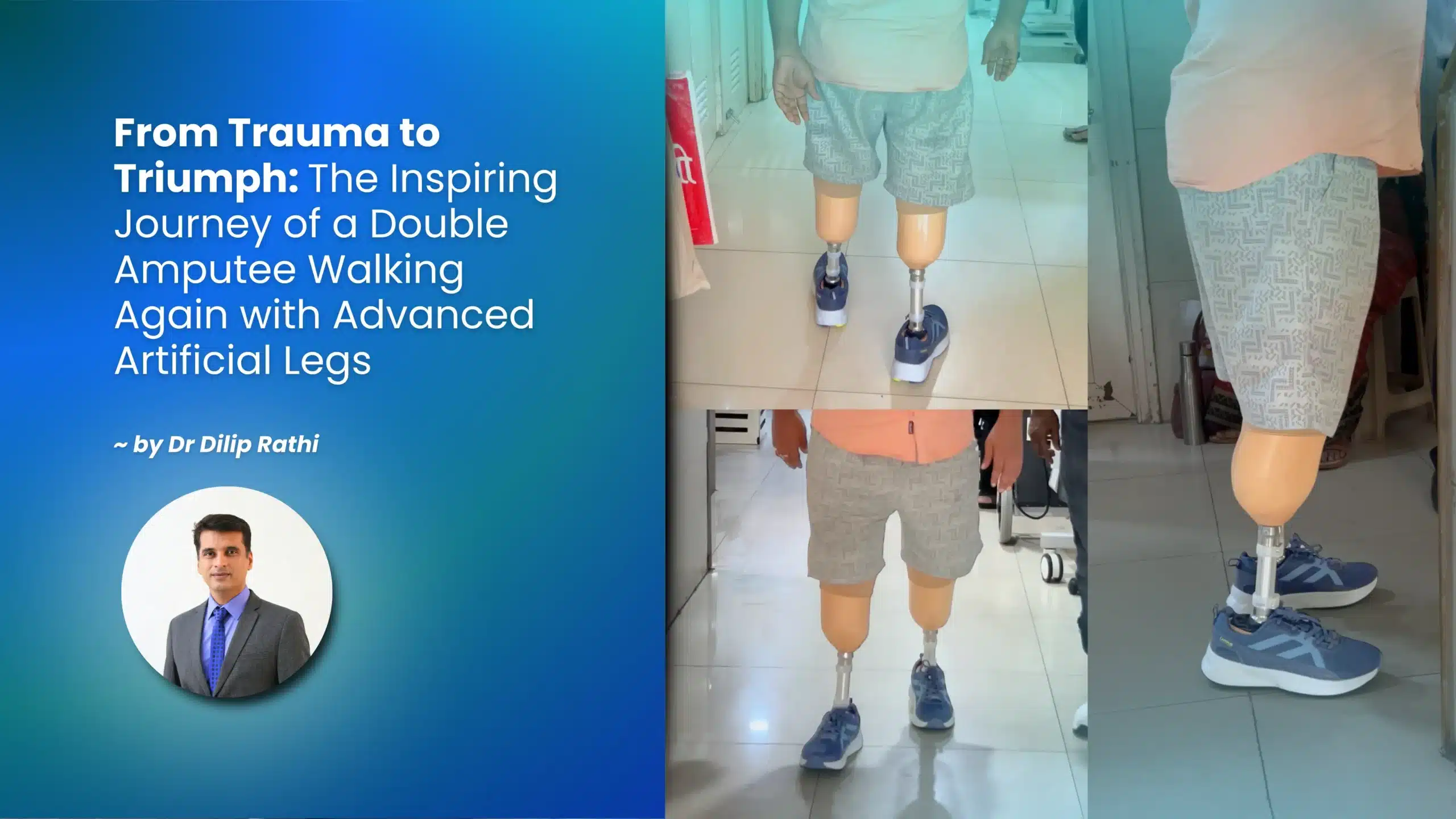
The patient received advanced prosthetic limbs that were carefully fitted according to his body measurements, residual limb condition, and walking requirements.
Every adjustment was made with precision to ensure maximum comfort and optimal function.
This customized approach significantly improved mobility and reduced complications such as pressure sores and discomfort.
Why Is Precision During Prosthetic Fitting So Important?
Even the most advanced prosthetic limb cannot deliver optimal results without proper fitting.
A poorly fitted prosthesis can cause:
- Pain
- Skin irritation
- Pressure ulcers
- Difficulty walking
- Poor posture
- Frequent falls
- Reduced confidence
Dr. Dilip Rathi emphasized accurate prosthetic alignment and individualized fitting to ensure smooth movement and better gait mechanics.
Regular follow-up appointments allowed the team to make necessary modifications as the patient’s body adapted during recovery.
This attention to detail greatly contributed to the patient’s successful rehabilitation.
How Did Physiotherapy Help the Patient Walk Again?
Artificial legs alone do not restore mobility.
Successful rehabilitation depends heavily on structured physiotherapy.
The patient underwent progressive rehabilitation that focused on:
- Balance training
- Core strengthening
- Muscle conditioning
- Walking practice
- Weight shifting exercises
- Stair climbing
- Endurance improvement
- Functional independence
Initially, standing itself was a challenge.
Gradually, with determination and professional guidance, the patient progressed from standing with support to walking confidently using his artificial legs.
Each milestone became a source of motivation.
What Challenges Did the Patient Overcome During Rehabilitation?
Recovery after bilateral amputation is rarely straightforward.
The patient faced numerous physical and emotional obstacles, including:
- Phantom limb sensations
- Muscle weakness
- Balance difficulties
- Fatigue
- Fear of falling
- Learning a completely new walking pattern
Despite these challenges, his commitment to rehabilitation remained strong.
Regular encouragement from Dr. Dilip Rathi and the rehabilitation team helped him stay focused on achieving long-term independence rather than short-term setbacks.
His determination ultimately became one of the greatest factors behind his remarkable progress.
How Was the Patient Able to Walk Again Within Eight Months?
Recovery after double amputation requires patience, consistency, and expert guidance.
Within eight months, the patient successfully transitioned from complete dependence to independent walking with advanced prosthetic limbs.
His transformation was made possible through the combination of:
- Expert orthopedic care
- Well-planned surgical intervention
- Advanced prosthetic technology
- Accurate prosthetic fitting
- Structured physiotherapy
- Continuous medical supervision
- Strong emotional support
- The patient’s determination and perseverance
Today, he walks with renewed confidence and enjoys a significantly improved quality of life.
His journey serves as a powerful reminder that life after amputation can still be active, productive, and fulfilling.
Why Does Advanced Technology Make a Difference in Prosthetic Rehabilitation?
Medical technology has significantly improved outcomes for amputees.
Modern prosthetic systems offer:
- Better shock absorption
- Improved energy return
- Lightweight materials
- Enhanced joint mechanics
- Greater walking efficiency
- Improved long-term comfort
Combined with digital assessment techniques and evidence-based rehabilitation protocols, these innovations help patients regain mobility more effectively than ever before.
However, technology alone is not enough. The expertise of the orthopedic surgeon, rehabilitation specialists, prosthetists, and physiotherapists plays an equally important role in achieving successful outcomes.
Why Choose Dr. Dilip Rathi for Complex Trauma and Rehabilitation Care?
Managing severe trauma cases requires extensive experience, precise decision-making, and a patient-centered approach.
Dr. Dilip Rathi focuses on providing comprehensive orthopedic care that extends beyond surgery. His approach emphasizes restoring function, improving mobility, and helping patients regain independence through personalized treatment plans.
From accurate surgical planning to advanced prosthetic rehabilitation and long-term follow-up, every stage of treatment is designed to maximize recovery while supporting the patient’s physical and emotional well-being.
By integrating advanced technology with compassionate care, Dr. Dilip Rathi and his team strive to deliver outcomes that help patients return to meaningful, active lives.
What Can Patients Learn from This Inspiring Journey?
This remarkable success story demonstrates that even after experiencing one of life’s most devastating injuries, hope remains possible.
Losing both legs does not mean losing the ability to live independently. With expert orthopedic care, advanced artificial limb technology, dedicated rehabilitation, and unwavering determination, patients can regain mobility, confidence, and a renewed sense of purpose.
The patient’s transformation—from being unable to stand after a devastating accident to walking again within eight months—stands as a testament to the power of modern medicine, expert rehabilitation, and the resilience of the human spirit.
His journey is not simply about learning to walk again. It is about overcoming fear, embracing hope, and proving that with the right medical expertise and relentless determination, even the greatest challenges can become extraordinary stories of recovery and triumph. To know more about RNH Hospital, visit – https://rnhhospital.com/