Meniscus Tear: Symptoms, Causes, Diagnosis, Treatment & Recovery
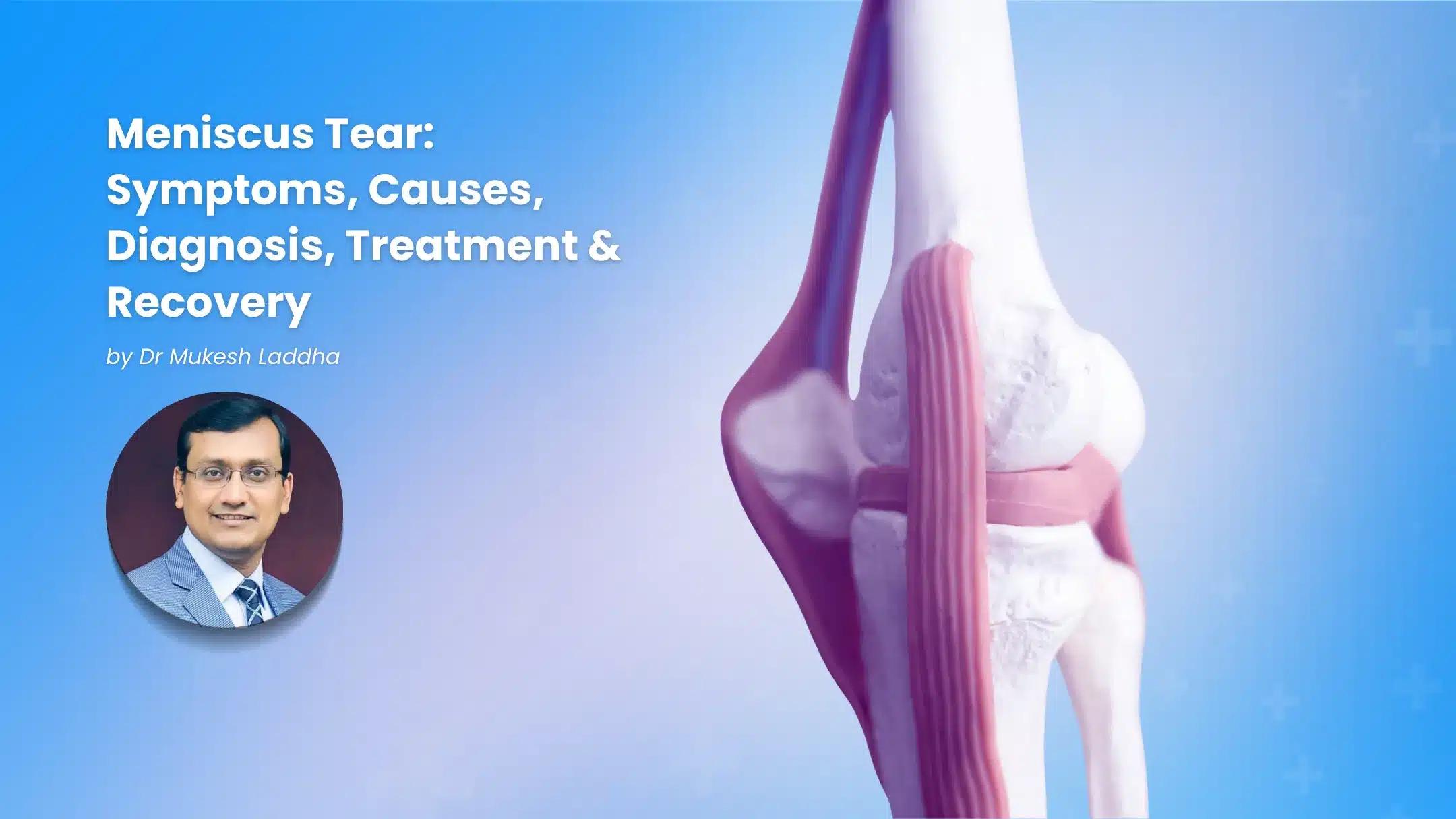
A meniscus tear is a common knee injury that can cause pain, swelling, stiffness, clicking, catching, or difficulty moving the knee. The meniscus is a tough, C-shaped piece of cartilage located between the thighbone (femur) and shinbone (tibia). Each knee has two menisci that help absorb shock, distribute weight, and contribute to knee stability.
A meniscus tear can occur suddenly during sports or other activities that involve twisting the knee. It can also develop gradually because the meniscus becomes weaker and less flexible with age.
The good news is that not every meniscus tear requires surgery. Treatment depends on factors such as the type, size and location of the tear, symptoms, age, activity level, and overall condition of the knee.
What Is a Meniscus Tear?
A meniscus tear occurs when one of the two menisci in the knee becomes damaged or torn.
The two menisci are:
- Medial meniscus: Located on the inner side of the knee.
- Lateral meniscus: Located on the outer side of the knee.
The menisci act as shock absorbers between the femur and tibia. They also help distribute forces through the knee and contribute to joint stability.
A tear can range from a small injury to a more significant tear that interferes with knee movement.
What Causes a Meniscus Tear?
A meniscus tear can happen because of an acute injury or gradual degeneration.
Sports and Sudden Twisting
A common cause of an acute meniscus tear is suddenly twisting, pivoting, cutting, or rotating the knee while the foot is planted.
Sports that involve frequent changes in direction can increase the risk.
Examples include:
- Football
- Basketball
- Tennis
- Cricket
- Kabaddi
- Badminton
- Running and other athletic activities
A meniscus tear can occur with or without contact during sports.
Age-Related Wear and Tear
As people get older, the meniscus can become weaker and less flexible. Degenerative changes can make the tissue more vulnerable to injury.
In an older adult, even a relatively minor twisting movement may sometimes cause a meniscus tear.
Squatting or Kneeling
Deep squatting, kneeling, or lifting while the knee is rotated can place additional stress on the meniscus and may contribute to an injury.
Meniscus Tear Symptoms
The symptoms of a meniscus tear can vary depending on the location and severity of the injury.
Common meniscus tear symptoms include:
- Knee pain
- Swelling
- Stiffness
- Tenderness along the joint line
- Clicking or popping
- Difficulty bending or straightening the knee
- A feeling that the knee is catching or locking
- A feeling that the knee is giving way
- Reduced range of motion
Some people experience a popping sensation at the time of injury. Swelling and stiffness may develop gradually rather than immediately.
Can You Walk With a Meniscus Tear?
Yes, some people can still walk after a meniscus tear. In fact, many people are able to continue walking or even participating in activities immediately after an injury.
However, continuing activities that cause pain, twisting, or swelling can aggravate symptoms.
If you have persistent knee pain, swelling, locking, or difficulty moving the knee, an orthopaedic evaluation can help determine the cause.
Types of Meniscus Tears
Meniscus tears can have different shapes and patterns.
Some common types include:
Radial Tear
A radial tear extends from the inner edge of the meniscus toward the outer portion.
Bucket-Handle Tear
A bucket-handle tear is a larger tear in which a portion of the meniscus can become displaced and may cause the knee to lock.
Flap Tear
A flap tear occurs when part of the meniscus becomes torn and forms a flap.
Degenerative Tear
Degenerative tears develop as the meniscus becomes weaker and undergoes age-related changes.
The type and location of the tear can influence treatment decisions.
How Is a Meniscus Tear Diagnosed?
If you have symptoms of a meniscus tear, an orthopaedic doctor will usually begin with a medical history and physical examination.
The doctor may ask:
- How did the injury occur?
- Did you hear or feel a pop?
- Where does your knee hurt?
- Is your knee swollen?
- Does your knee lock or catch?
- Can you fully bend and straighten your knee?
- Do you feel that your knee is unstable?
Physical Examination
During an examination, the doctor may check for tenderness around the joint line and perform specific knee movements.
Tests such as the McMurray test and Thessaly test may be used as part of the assessment. Combining findings from the physical examination can help doctors evaluate a suspected acute meniscus injury.
X-Ray
An X-ray does not directly show a meniscus tear because the meniscus is soft tissue.
However, an X-ray may be used to look for other causes of knee pain, including bone problems or osteoarthritis.
MRI Scan
An MRI provides detailed images of the soft tissues inside the knee, including the meniscus, ligaments, cartilage, and tendons.
MRI is considered the preferred imaging method for diagnosing acute meniscus tears because of its high accuracy.
Meniscus Tear Treatment
There is no single treatment that is appropriate for every meniscus tear.
Treatment depends on:
- Type of tear
- Location of the tear
- Size of the tear
- Severity of symptoms
- Age
- Activity level
- Other knee conditions
- Whether the knee is locking or movement is restricted
Non-Surgical Treatment
Some meniscus tears can be managed without surgery, particularly when symptoms are manageable and there is no significant mechanical blockage of knee movement.
Treatment may include:
- Activity modification
- Rest from aggravating activities
- Ice for pain and swelling
- Medication when appropriate
- Physical therapy
- Exercises to improve strength and range of motion
Physiotherapy can help improve knee movement, strength, and function. However, rehabilitation does not physically repair every type of structural tear.
Physical Therapy for Meniscus Tear
A physiotherapist may develop an exercise program based on your symptoms and stage of recovery.
Rehabilitation may focus on:
- Restoring knee movement
- Strengthening the quadriceps
- Strengthening the hamstrings
- Improving hip and lower-limb strength
- Improving balance
- Gradually returning to activities
Exercises should be performed under appropriate professional guidance, particularly when the diagnosis has not yet been confirmed.
When Is Meniscus Tear Surgery Needed?
Not every meniscus tear needs surgery.
Surgery may be considered when symptoms continue despite appropriate nonsurgical treatment or when a tear causes significant mechanical symptoms or restricted knee movement.
The decision depends on the individual patient and the characteristics of the tear. Current AAOS guidance emphasizes preserving as much functional meniscal tissue as possible when surgery is indicated because maintaining healthy meniscus tissue can help reduce the risk of later joint degeneration.
Meniscus Tear Surgery
One common surgical approach is knee arthroscopy.
During arthroscopic surgery, the surgeon makes small openings around the knee and inserts a camera to view the inside of the joint. Surgical instruments can then be used to repair the tear or remove/trim damaged tissue when appropriate.
Meniscus Repair
When the tear is suitable for repair, the surgeon attempts to preserve the meniscus and repair the damaged tissue.
Whether repair is possible depends on factors such as the location and pattern of the tear and the condition of the surrounding tissue.
Meniscus Trimming or Partial Meniscectomy
In some cases, damaged tissue that cannot be repaired may be trimmed or removed while preserving as much healthy meniscus as possible.
The appropriate procedure should be determined by an orthopaedic surgeon after evaluating the knee.
Meniscus Tear Recovery
Recovery time varies significantly depending on the injury and treatment.
For a nonsurgical injury, recovery may involve gradually improving pain, swelling, movement, strength, and function through activity modification and rehabilitation.
Recovery after surgery depends on whether the meniscus was repaired or damaged tissue was trimmed.
Meniscus repair generally requires a longer rehabilitation period than some trimming procedures because the repaired tissue needs time to heal. AAOS notes that after meniscus repair, knee motion is often gradually progressed during the first several weeks, and return to normal activity may take around six months depending on the tear and repair.
Your surgeon and physiotherapist will provide individualized instructions regarding:
- Weight-bearing
- Knee movement
- Use of crutches
- Exercises
- Return to work
- Return to sports
- Follow-up appointments
Can a Meniscus Tear Heal on Its Own?
Some meniscus tears may improve without surgery, particularly depending on their location and characteristics.
The outer portion of the meniscus has a better blood supply than the inner portion, which can influence healing potential.
However, whether a particular tear can heal or requires treatment cannot be determined from symptoms alone. An orthopaedic evaluation may be necessary.
When Should You See an Orthopaedic Doctor?
You should consider medical evaluation if you have:
- Persistent knee pain
- Significant swelling
- Difficulty walking
- Repeated knee locking or catching
- Difficulty fully bending or straightening the knee
- A feeling that your knee is giving way
- Symptoms that are getting worse
- Knee pain that does not improve with initial self-care
Urgent medical assessment is particularly important after a significant injury if you cannot put weight on the leg, cannot bend or straighten the knee, or have severe pain or swelling.
How Can You Reduce the Risk of a Meniscus Tear?
Not every meniscus tear can be prevented, but maintaining good knee and lower-limb strength may help support healthy movement.
Some useful habits include:
- Warm up before sports or exercise.
- Strengthen the muscles around the knee and hip.
- Improve flexibility and mobility.
- Use proper sports techniques.
- Increase exercise intensity gradually.
- Avoid sudden increases in training load.
- Use appropriate footwear for your activity.
- Take adequate recovery time after intense exercise.
Frequently Asked Questions About Meniscus Tear
What is a meniscus tear?
A meniscus tear is an injury to one of the two C-shaped cartilage structures between the thighbone and shinbone. The menisci help absorb shock, distribute weight, and stabilize the knee.
What are the most common meniscus tear symptoms?
Common symptoms include knee pain, swelling, stiffness, clicking, catching, locking, difficulty moving the knee, and a feeling that the knee may give way.
Does every meniscus tear require surgery?
No. Some tears can be managed with activity modification, medication when appropriate, and physiotherapy. Surgery may be considered when symptoms persist or when certain tears cause significant mechanical problems.
Is MRI necessary for a meniscus tear?
An MRI is commonly used to confirm an acute meniscus tear because it provides detailed images of the knee’s soft tissues. The need for imaging depends on the clinical situation and the doctor’s assessment.
How long does it take to recover from meniscus tear surgery?
Recovery varies according to the type of tear and procedure. Meniscus repair generally requires a longer rehabilitation period than some procedures that trim damaged tissue. Some patients may take around six months to return to normal activity after repair, depending on their individual recovery.
Can physiotherapy help with a meniscus tear?
Yes. Physiotherapy can help improve knee movement, strength, stability, and function. Whether physiotherapy alone is appropriate depends on the type of tear and the individual’s symptoms.
Conclusion
A meniscus tear is a common knee injury that can affect people ranging from athletes to older adults with age-related changes in the knee. Pain, swelling, stiffness, clicking, locking, and difficulty moving the knee are common symptoms.
Accurate diagnosis is important because several knee conditions can produce similar symptoms. A physical examination and, when appropriate, MRI can help identify a meniscus injury.
Treatment may range from activity modification and physiotherapy to arthroscopic surgery, depending on the individual case. When surgery is required, preserving as much healthy meniscal tissue as possible is an important consideration.
If you experience persistent knee pain, swelling, locking, or difficulty moving your knee after an injury, consult a qualified orthopaedic specialist for an appropriate evaluation and treatment plan.
Medical Disclaimer: This article is intended for general educational purposes and should not be considered a substitute for professional medical diagnosis or treatment. Treatment decisions should be made by a qualified healthcare professional after evaluating the individual patient.